
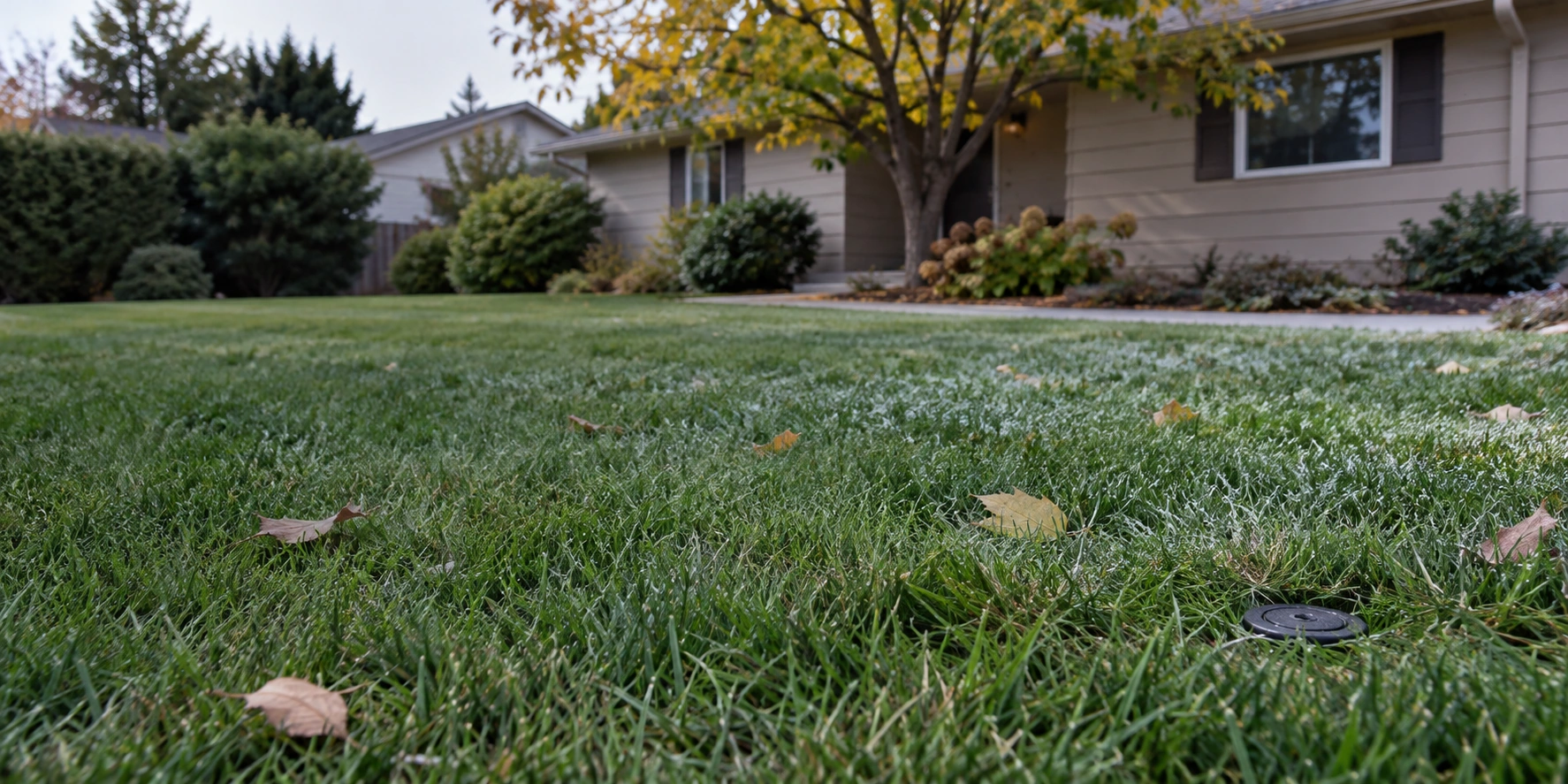
Missed Your
Sprinkler Blowout?
Missed winterization before the first freeze? Let’s talk about your sprinkler system, what you’ve noticed and the next step.
You’re Not Alone.
A missed appointment does not have to leave you guessing.
I forgot to
schedule.
Fall got busy, and my sprinklers still need winterizing.
A freeze is
coming.
Cold weather is ahead, and my blowout is not done.
It froze
last night.
My system was not winterized before temperatures dropped.
I’m seeing
a leak.
I have noticed water or wet spots since the freeze.
I’m not sure
what’s next.
I would like help deciding what to do with my system.
It Froze Last Night.
Should I Still Get a Blowout?
Possibly. The right next step depends on your system’s condition and whether any components are frozen.
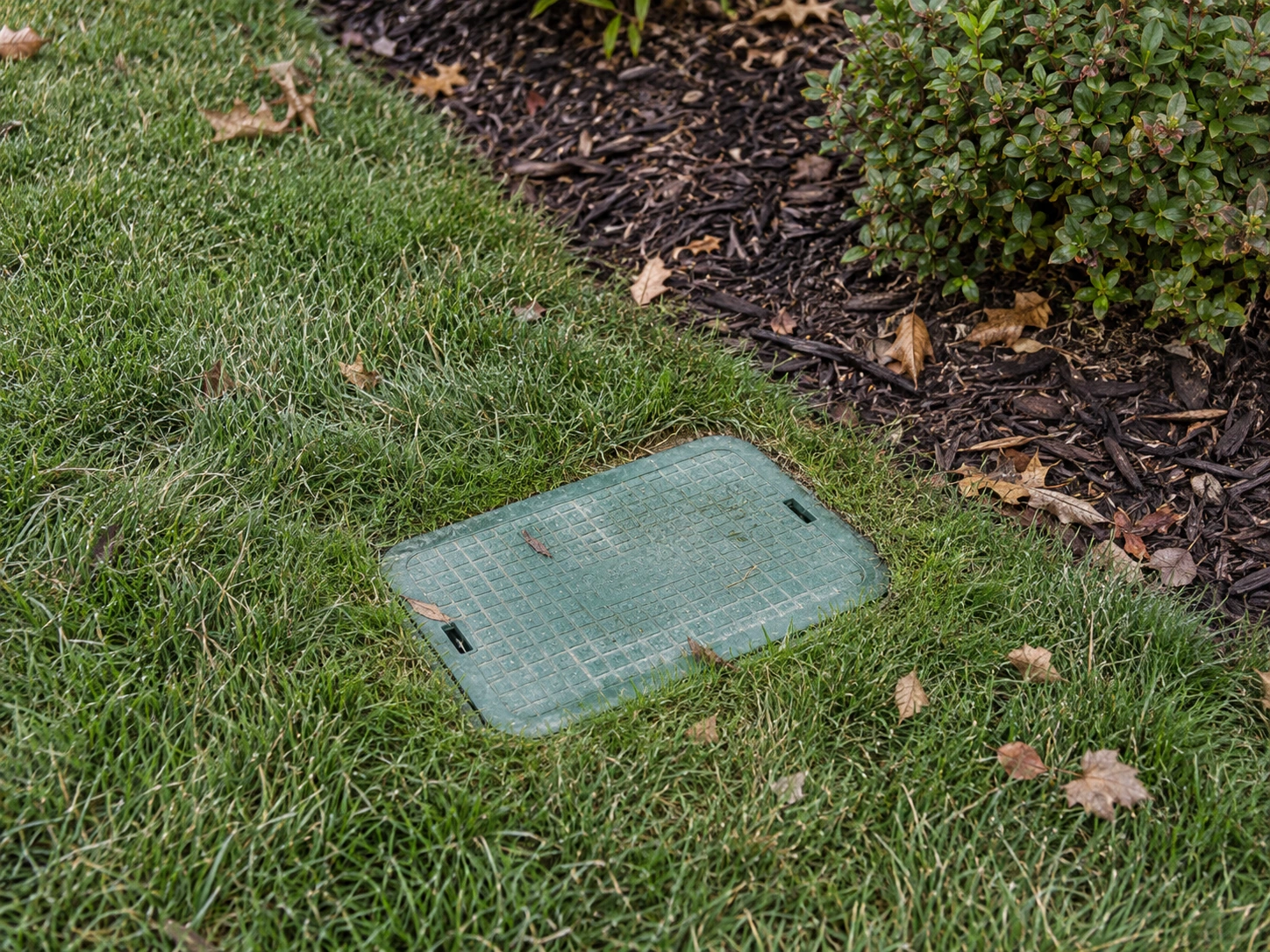
Frost on the lawn does not tell us what is happening inside every pipe or valve. The important questions are whether water remains, whether anything is damaged and what can be done safely.
Contact Boise Sprinkler Guy to discuss your system and current service availability. A late-season visit should begin with the condition of the system—not an assumption that a routine blowout will fix everything.
What Happens If You Miss
Your Sprinkler Blowout?
The concern is the water left behind—not just a date on the calendar.
Off isn’t the same
as empty.
Stopping the watering schedule, shutting off the supply and removing trapped water are different steps. Your yard can look ready for winter while water is still inside.[1]
Some leaks show up later.
A small crack may not become obvious until water is restored and the system is checked in spring.[7]
What a Technician May Encounter
Some systems may still be suitable for winterization. Others need a closer look before work can proceed. Here are the kinds of conditions that can change the plan.
Water trapped in low spots
A quiet system is not necessarily an empty system. Water can collect in low sections of pipe, sprinkler bodies and valve compartments, even after someone has tried to drain it.[3]
The layout and drainage points help determine how to remove remaining water. Water stopping at one head does not establish that the whole system is empty.
Ice or an obstructed zone
Suspected ice changes the decision about what is safe to do. A blockage is not a reason to force more air into a zone or turn the pressure up.[2]
Assess the condition first. Compressed air must stay within component limits; it is not a way to blast ice out of a frozen line.
Backflow leaks or cracks
An exposed backflow assembly may have a cracked housing or damaged internal parts. Dripping or discharge can also have causes other than freezing, so the cause needs checking.[5]
The device may need separate diagnosis and model-specific winterization or repair. Clearing sprinkler lines does not repair a damaged backflow assembly.
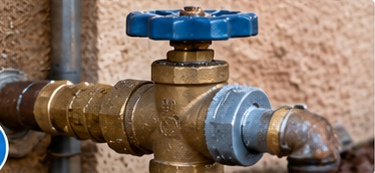
A shutoff that will not turn
A main shutoff may be hard to reach, stiff or damaged. Because the water supply must be isolated before winterization, a problem here can affect what happens next.[3]
Check access and operation before proceeding. Do not force a stuck valve; discuss the safest next step with a professional.
Head, valve or wiring issues
A broken head or a zone that does not respond may be noticed during assessment. Clogged nozzles, control wiring and valve faults can also cause trouble unrelated to a freeze.[4]
Find the cause rather than assuming that every symptom is winter damage. Repair work may require its own estimate and scheduled appointment.
Damage that shows up later
Small buried leaks and intermittent faults may not be visible during a winter visit. A system that looks fine from above can still need attention when water is restored.[6]
A careful spring startup can reveal visible leaks and poor operation. Buried or intermittent problems may still need additional troubleshooting.
Actual findings and the work that can be completed depend on your system, conditions and equipment access. Confirm the scope of your visit when scheduling.
Can a Late Blowout Still Help?
Removing water and repairing damage are two different jobs.
A blowout does not mend a split pipe or restore a broken valve. The assessment helps determine which next step is appropriate.
Winterize the system
When the equipment, access and conditions allow safe winterization, removing remaining water may still be useful. Confirm what the visit includes and when service is available.
About sprinkler blowouts →Discuss the repair
A cracked part, leaking connection or failed valve may need separate work. Ask what needs attention, whether an estimate is required and whether another appointment is needed.[4]
Explore sprinkler repair →Plan the next safe step
Suspected freezing or inaccessible equipment may prevent completion. Discuss immediate precautions and whether reassessment is needed. Do not assume that waiting for one warmer day resolves every issue.
Talk about your system →“It may not be too late” means there may still be useful steps to take.
It does not mean that a blowout can reverse damage or guarantee an undamaged system.
What to Do if You Missed Your Blowout
Start with what you can safely observe. Leave testing to a professional.
Keep automatic
watering off.
Do not restart a potentially frozen system to check whether it works. Ask for professional guidance before testing or operating components that may be frozen.
Look for
visible problems.
From a safe position, note damaged heads, visible leaks or unusual pooling. If you know the irrigation shutoff and can safely use it, isolate an active leak. Never force a stuck valve.
Ask about
service availability.
Describe the concern and your location. Confirm the next available appointment and the scope of work; a service request is not a promise of same-day or after-freeze service.
What to Tell Us
When You Request Service
A few useful details can make the conversation more specific. Photos can help explain visible concerns, but do not turn the system on just to demonstrate a problem.[4]
- Your property address and ZIP code
- When the sprinklers were last used
- Whether the irrigation supply is still on
- Any leaks, wet spots or visible damage
- Winterization already attempted
- Photos and equipment-access details
Late-Season Sprinkler Blowout FAQs
Clear answers about missed winterization, freeze damage and the next step.
Is it too late to blow out my sprinklers?
Not necessarily. Whether winterization can be completed safely depends on the system’s condition, not just the calendar. Contact us with your ZIP code, what you have noticed and any winterization already attempted. Current availability must be confirmed.
Can you blow out sprinklers after the first freeze?
Possibly, but suspected frozen components should be assessed before work proceeds. A cold night does not establish how every part of the system has been affected. Do not use high air pressure to try to force ice through a line.
My sprinklers were not winterized. Are they damaged?
A missed blowout alone does not tell us whether damage has occurred. Water can remain inside components and cause damage if it freezes. Some problems may be visible now; others become apparent when the system is filled and checked in spring.
Will a late blowout repair freeze damage?
No. Removing remaining water and repairing broken parts are separate tasks. A blowout does not seal a split pipe, mend a cracked fitting or restore a failed valve. Suspected damage needs its own assessment.
Can I get a sprinkler blowout in November or December?
Contact us to check current availability for November or December. Weather, equipment access and the system’s condition help determine what can be done safely. Let us know about any suspected freezing or damage when you request service.
What should I do if I see a leak after a freeze?
Keep automatic watering off and call (208) 323-1223. If you know the irrigation shutoff and can safely operate it, isolate the irrigation water supply. Do not force a frozen or stuck valve, open pressurized components or turn the system on to demonstrate the leak.
Will I need a spring system check?
A careful spring startup is an opportunity to look for visible leaks, damaged heads and zones that operate poorly. Tell the technician about the missed winterization and any known issues. A winter visit cannot establish that every buried component is undamaged.
What areas do you serve?
Blowout service is offered in selected ZIP codes in Boise, Meridian, Kuna, Garden City and Eagle. Check the published service-area list and confirm current availability before booking; coverage is limited to the listed ZIP codes.
View blowout service area →Technical references & service information
Educational guidance checked October 15, 2026. System-specific instructions and current appointment availability take priority.
- Rain Bird — winterization basics
- Hunter Industries — winterization and compressed-air safety
- Colorado State University Extension — preparing a sprinkler system for winter
- Boise Sprinkler Guy — sprinkler repair and estimates
- Boise Sprinkler Guy — backflow services
- Boise Sprinkler Guy — startup services
- Boise Sprinkler Guy — sprinkler blowouts and service area
Missed Your Blowout?
Let’s Talk About Your System.
Tell us what you’ve noticed. We’ll help you determine the next step
and check current service availability.